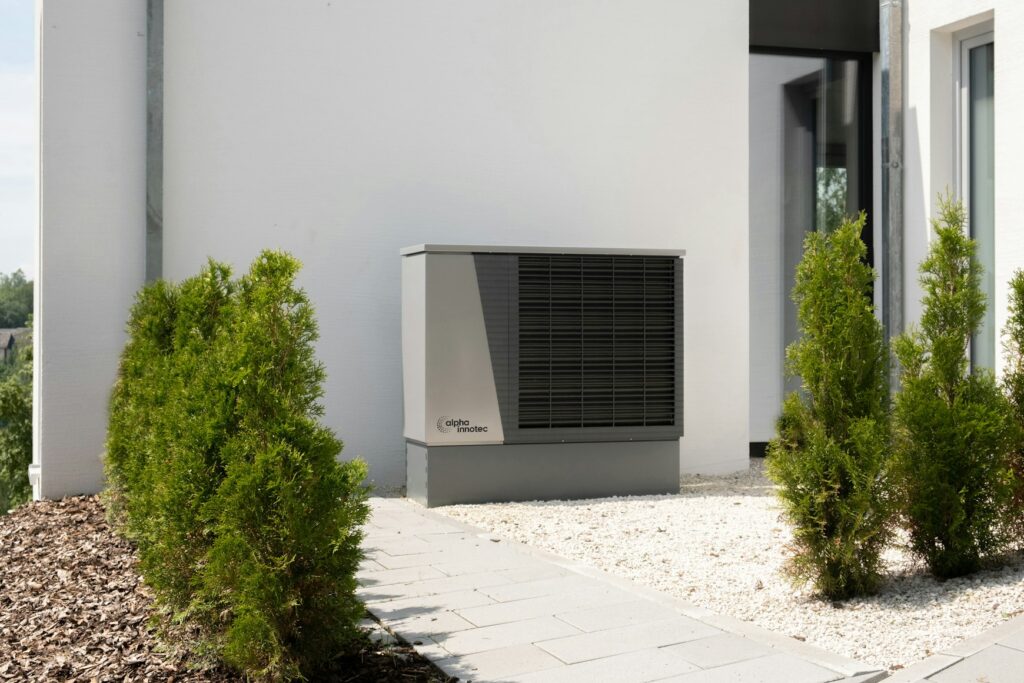
Air Conditioning Contractors of America has added a resource center to help HVAC businesses navigate questions about ground-fault circuit-interrupter protection for outdoor equipment. The launch was reported September 11, following the September 1 expiration of a code exemption. The Air Conditioning Contractors of America announcement also lists a free webinar for September 23 at noon Eastern.
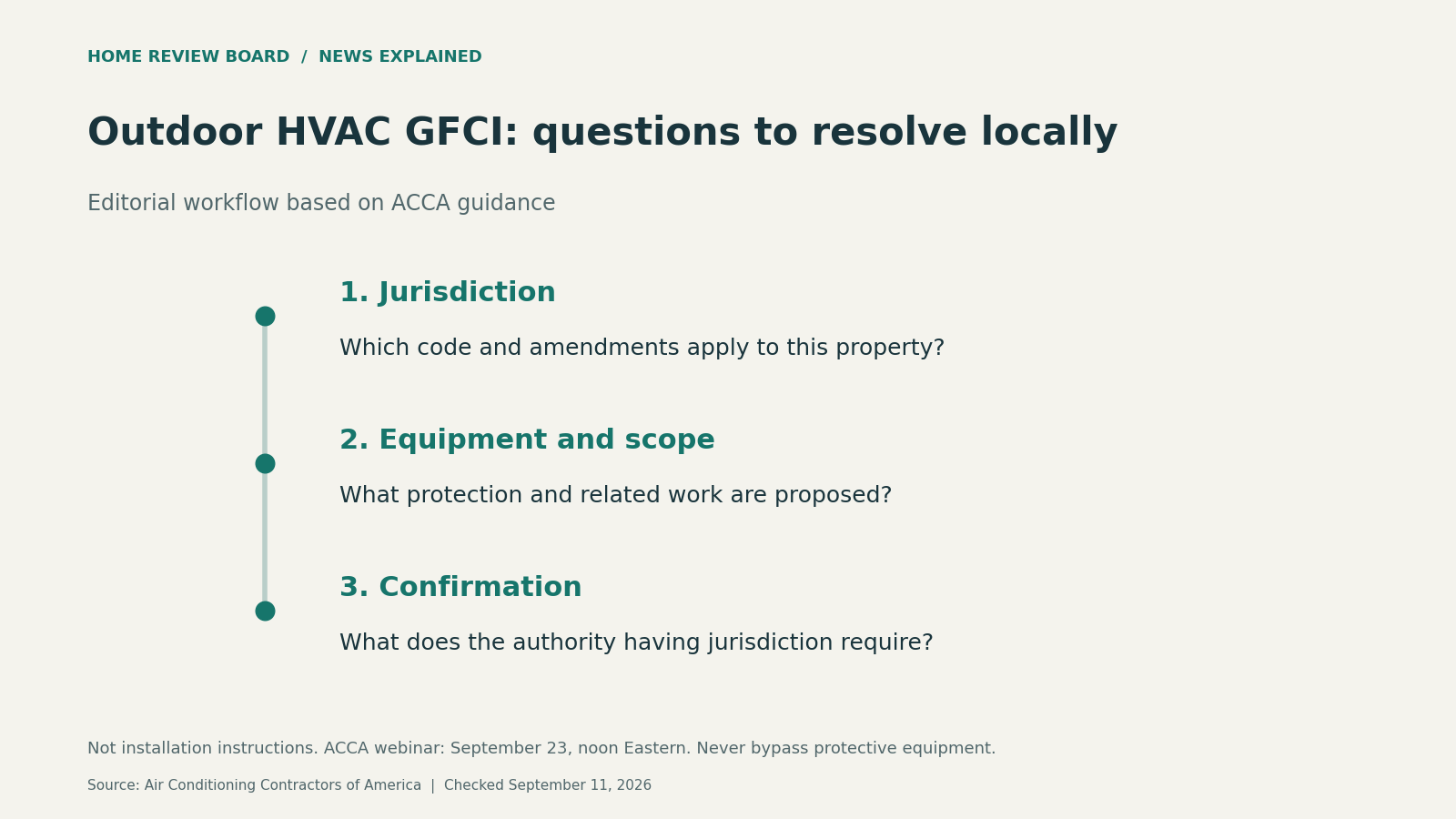
ACCA’s guidance emphasizes that state and local adoption determine what applies to a job. It discusses equipment compatibility and unwanted tripping concerns, but those industry concerns do not establish that every installation will have a problem. The relevant authority must confirm the requirements for the actual project.
Ask which requirement the proposal is addressing
A homeowner receiving a new HVAC estimate can ask the contractor to identify the applicable local rule and explain any related electrical work. If another trade must participate, the proposal should say who coordinates it and whether its cost is included. A reference to a national code deadline alone leaves those questions unanswered.
The new guidance should not be read as permission to bypass protective equipment. Nor should a customer assume that a system’s voltage automatically settles applicability. ACCA’s reference material specifically addresses the importance of reading the code’s terms and checking the jurisdiction rather than relying on a shorthand description.
When a contractor proposes a remedy for repeated interruptions, ask what has been diagnosed, what documentation supports the proposed equipment and how the installation will be reviewed. Keep operational symptoms separate from an assumption about their cause. A nuisance-tripping discussion is not an address-specific diagnosis.
Use the new training to improve estimates
The resource center gives businesses a place to follow the association’s technical materials and state-tracking links. The September 23 webinar is a current training opportunity, while the September 1 date explains why questions are arriving now. Neither replaces the local authority’s interpretation.
For a service company, the useful customer-facing result is a clearer scope: the proposed HVAC equipment, any required electrical changes, the responsible parties and the basis for compliance. Avoid promising that a particular device will eliminate every possible interruption without evidence for that installation.
The homeowner’s next step is to request a plain-language explanation of the electrical protection included in the project. The contractor’s next step is to confirm current local requirements and consult the relevant technical documentation. The new resource is valuable because it organizes those questions, not because it creates one uniform answer for every U.S. home.
Further reading
Questions to ask an hvac company and Electrical capacity before home upgrades.
Sources
- Air Conditioning Contractors of America: ACCA adds outdoor-HVAC GFCI guidance as contractors sort out local requirements
- The ACHR NEWS: ACCA Offers Guidance as GFCI Exemption Expires
- ACCA: Outdoor HVAC GFCI quick reference guide
Request a heating and cooling quote.
Home Review Board publishes practical guides and source-grounded news. Project requirements depend on the property and location. Read our research approach.