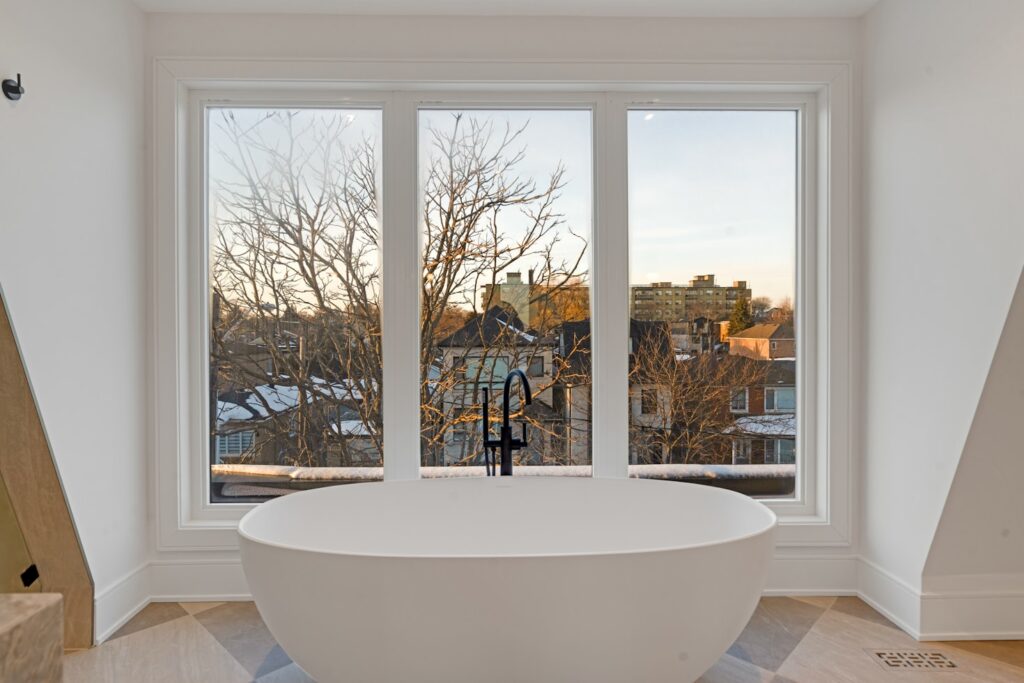
The most useful bathroom upgrade may be the one you barely notice: a room that feels comfortable after a shower, with controls everyone understands and equipment quiet enough to use.
Describe the room before choosing a fan
Start your conversation with the room as it works today. Note whether the mirror stays fogged, where moisture appears, how the current fan sounds, and whether people actually turn it on. Describe when the problem happens and how long it lasts. Observations give an installer a better starting point than a request for a bigger fan.
Include the changes planned for the remodel. A separate shower enclosure, a new ceiling, or a different room layout may change the installation discussion. Ask the designer to identify the ventilation work on the drawings and name the person responsible for coordinating it with the other trades.
Compare airflow and sound together
ENERGY STAR identifies moisture and odor removal as central purposes of bathroom ventilation. Its buying guidance also distinguishes airflow from sound: a fan must suit the room, while a low sound rating can make it less intrusive. Ask the installer to explain the proposed capacity and the product’s sound rating in sones. Do not treat the largest number on the box as the best fit.
Request a specific model in the proposal, including any light, heater, sensor, or speed options. If you compare two quotes, check whether they include the same functions. A price difference may reflect controls or installation work as much as the fan itself.
| Decision | Question for the installer |
|---|---|
| Capacity | What room details informed the proposed airflow? |
| Sound | What is the sound rating at the setting we will use? |
| Controls | How will someone start, extend, or override operation? |
| Installation | What duct, exterior termination, wiring, and finish work is included? |
Make the complete route part of the scope
Ask the contractor to explain where extracted air will travel and where it will discharge outdoors. Have them assess the existing route and specify any replacement ductwork, exterior termination, electrical work, and making good. The homeowner’s job is to obtain a complete scope; the installer should determine the appropriate arrangement and applicable requirements.
Clarify who will handle any work that crosses trades. If the route involves a roof or exterior wall, ask who is responsible for weather protection and the finished appearance. Record the answer alongside the product selection so it remains part of the job when orders are placed.
Choose controls around everyday use
A control should be understandable on an ordinary morning. Ask for a demonstration of the proposed switch, timer, or humidity sensor. Discuss what happens when someone takes a long shower, when a guest uses the room, and when the household wants the fan to keep running afterward.
Request the operating instructions before the final walkthrough. Keep the model number and maintenance information with the rest of the bathroom records. Ask how to access and clean the unit according to its manufacturer’s instructions, and what symptoms should prompt a service call.
Have the installer demonstrate the controls, confirm the installed model, explain the completed air route, and identify any recommended follow-up. Record unresolved moisture concerns instead of assuming the new fan has addressed every possible cause.
For a broader comfort discussion, read why some rooms never feel comfortable. If the project includes several trades, use our guide to comparing remodeling proposals.
Sources & further reading
ENERGY STAR: Ventilation Fans. Product context comes from ENERGY STAR; the briefing questions and handover checklist are Home Review Board’s original planning guidance. This article does not specify a ventilation design for an individual home.
Home Review Board publishes practical guides and source-grounded news. Project requirements depend on the property and location. Read our research approach.