A heat-pump proposal is a plan for how your home will feel on its hardest heating and cooling days. The equipment badge is only one part of that plan. The useful conversation starts with the building, the rooms that frustrate you, and what the installer expects the system to do.
Describe the problem before discussing the product
Write down what your current system gets wrong. Is an upstairs bedroom uncomfortable in the afternoon? Does the house feel uneven when doors are closed? Is the equipment loud beside a patio? Specific observations give a contractor something to investigate. “We want a more efficient system” is a goal; “the back bedroom stays uncomfortable after the rest of the house reaches the thermostat setting” is information.
Include the changes you already expect to make. An addition, new windows, a converted garage, or insulation work may affect the design discussion. Give each company the same brief so that differences between proposals are easier to interpret.
Understand the system being proposed
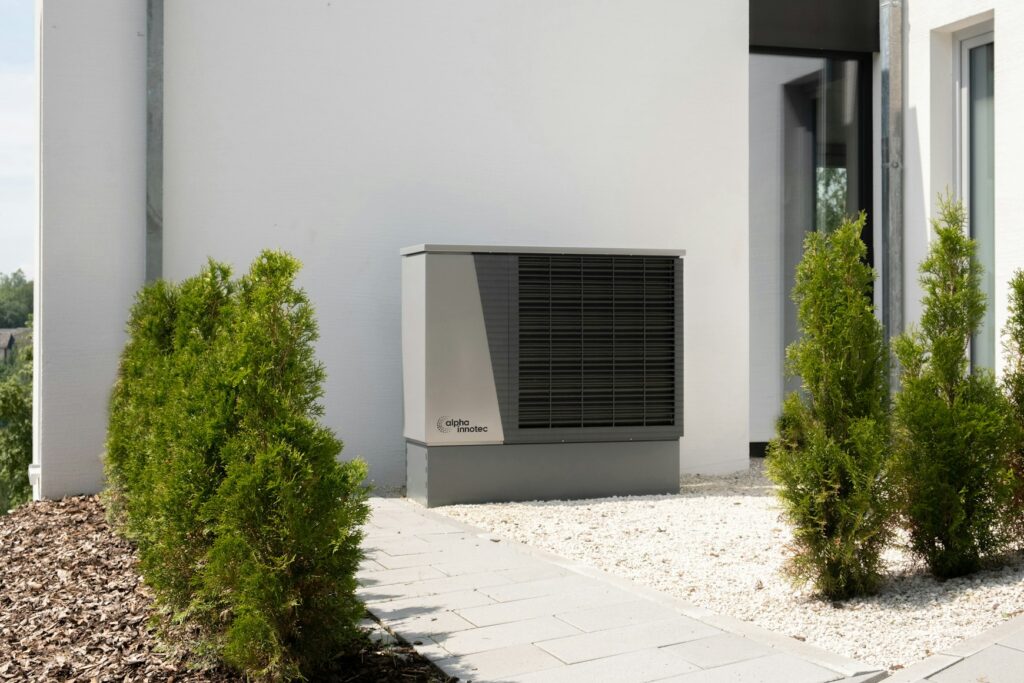
The Department of Energy explains that heat pumps move heat rather than generate it in the way a combustion furnace does. Systems may distribute conditioned air through ducts or use ductless indoor units. Those are different arrangements with different implications for equipment locations, room coverage, and the appearance of the installation. DOE’s heat-pump overview is a useful introduction to the main types.
Ask the contractor to draw the proposed arrangement on a simple floor plan. Identify which spaces it serves, where indoor and outdoor equipment will sit, and what happens to existing equipment. If two proposals recommend different arrangements, ask each company to explain the tradeoff in terms of your house.
The question to bring
“What did you learn about this home that led you to this system, and where is that reflected in the proposal?” A clear answer connects the recommendation to observations or calculations instead of the model the company usually sells.
Compare the entire installation
| Decision | Ask the installer to document |
|---|---|
| Capacity and room coverage | The sizing approach, rooms served, and assumptions about the building. |
| Distribution | Which ducts, grilles, or indoor units will be retained, changed, or added. |
| Cold-weather operation | Expected operation in local conditions and any backup-heating arrangement. |
| Installation scope | Electrical work, equipment supports, drainage, controls, permits, and removal of old equipment. |
| Handover | Startup checks, homeowner instructions, maintenance access, and service responsibility. |
These rows are an editorial comparison framework, not a sizing method. A homeowner should be able to understand the proposed outcome without performing the designer’s calculations. If a line is missing, mark it as unanswered rather than assuming it is included.
Separate operating assumptions from promises
If a proposal includes estimated running costs, ask which utility rates, thermostat settings, weather assumptions, and existing-system performance were used. Compare estimates made on the same basis. A product’s efficiency rating and your eventual bill are different pieces of information.
Avoid turning an initial estimate into a guaranteed saving. Your useful takeaway is which assumptions drive the comparison and which can change. Keep rebate or financing information separate from the equipment scope, and confirm any program terms with the organization offering them.
Plan the first week after installation
Ask how you will learn the controls, where filters or other serviceable parts are accessed, and whom to contact if a room still feels wrong. Have the company explain its commissioning and follow-up process before installation begins. The final handover should leave you with model information, warranty documents, operating instructions, and a clear service contact.
For the wider conversation with an installer, read our questions to ask an HVAC company. The aim is a documented design and a useful handover, not merely a new box outside the house.
Sources & further reading
U.S. Department of Energy: Heat Pump Systems. The comparison questions and planning framework above are Home Review Board editorial guidance; they are not a site assessment or an equipment recommendation.
Home Review Board publishes practical guides and source-grounded news. Project requirements depend on the property and location. Read our research approach.