
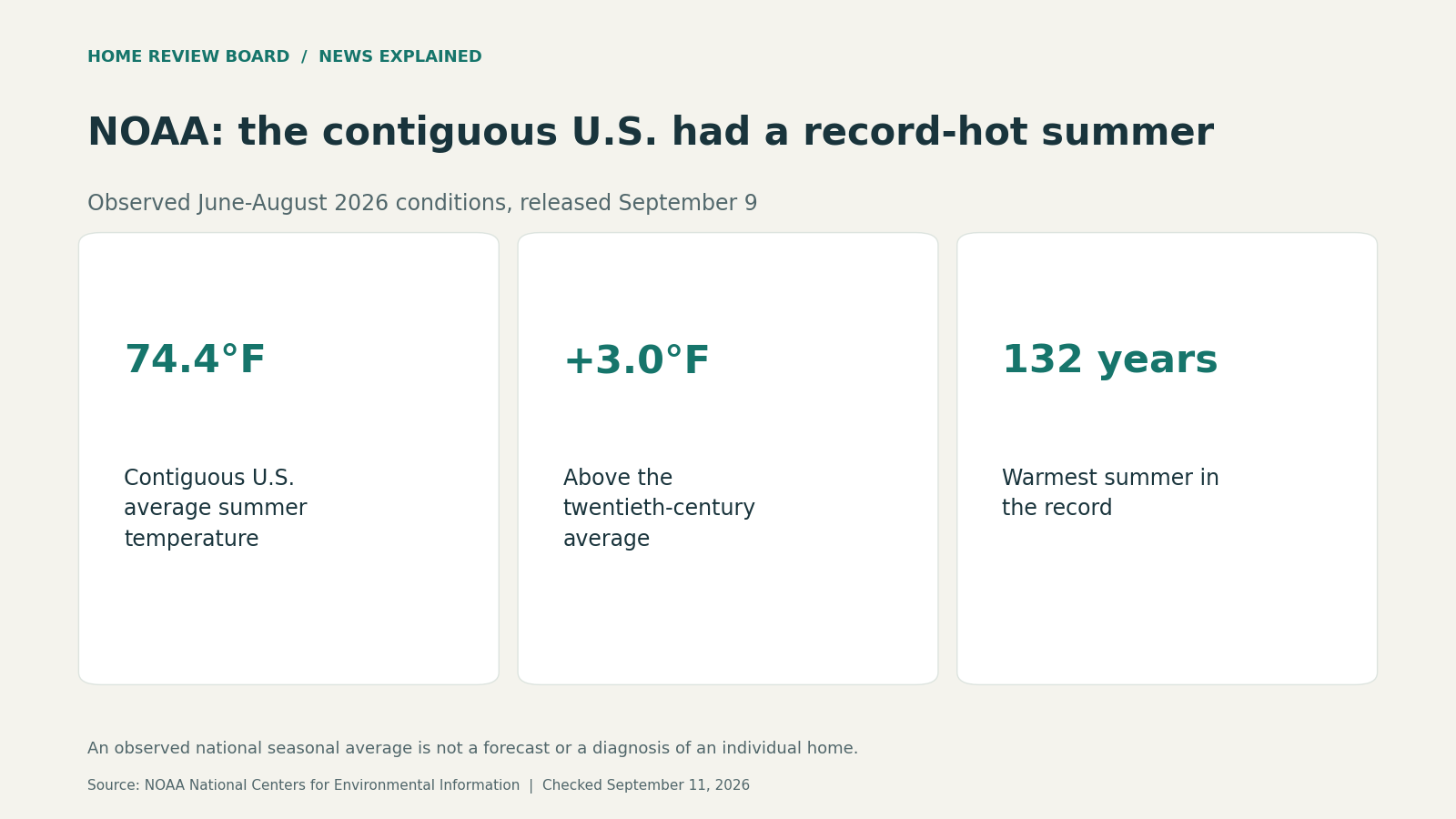
NOAA’s September 9 climate assessment ranks June through August 2026 as the warmest summer in the 132-year record for the contiguous United States. The average temperature was 74.4 degrees Fahrenheit, 3 degrees above the twentieth-century average, according to the NOAA National Centers for Environmental Information announcement. The report describes observed seasonal conditions, not a forecast for a particular home.
Rainfall patterns were far from uniform. Indiana and Ohio recorded their wettest August, while Texas and Oklahoma received less than 30% of their average August precipitation. The contrast matters for readers deciding which local conditions to investigate after summer, rather than treating a national temperature record as a complete maintenance diagnosis.
Bring the household's evidence to the service visit
For a heating and cooling appointment, useful records include the symptoms noticed, the rooms affected and how the system was operating when the problem occurred. Utility usage and past service notes can support the conversation. The national climate report cannot determine whether the equipment is correctly sized or whether a component needs replacement.
Similarly, a wet statewide month does not prove that a stain came from a roof leak, and a dry statewide month does not establish that every property remained dry. Document the actual condition and ask the relevant professional to explain the evidence behind a proposed repair.
Homeowners should distinguish preventive maintenance from work intended to correct a diagnosed problem. Both may be reasonable, but an estimate should make clear what the visit includes and what additional findings would require a separate decision.
Avoid turning climate records into sales guarantees
For home-service businesses, the report offers context for customer concerns about comfort and moisture. It does not justify claims that every house needs a larger cooling system, a new roof or a specific drainage project. Those recommendations require evidence from the property and an explanation of alternatives.
Businesses can improve the discussion by asking customers to describe the timing of symptoms before proposing a solution. A problem that appears only under certain conditions may require a different investigation from one that is present continuously. The seasonal report helps frame questions; it does not answer them.
The next step is to review the home’s actual observations and choose the appropriate diagnostic visit. NOAA’s assessment shows why a single national description of summer is incomplete. The maintenance decision should follow the local evidence and a written explanation of the work proposed.
Further reading
Questions to ask an hvac company and Finding hidden water leaks.
Sources
Request a heating and cooling quote.
Home Review Board publishes practical guides and source-grounded news. Project requirements depend on the property and location. Read our research approach.