
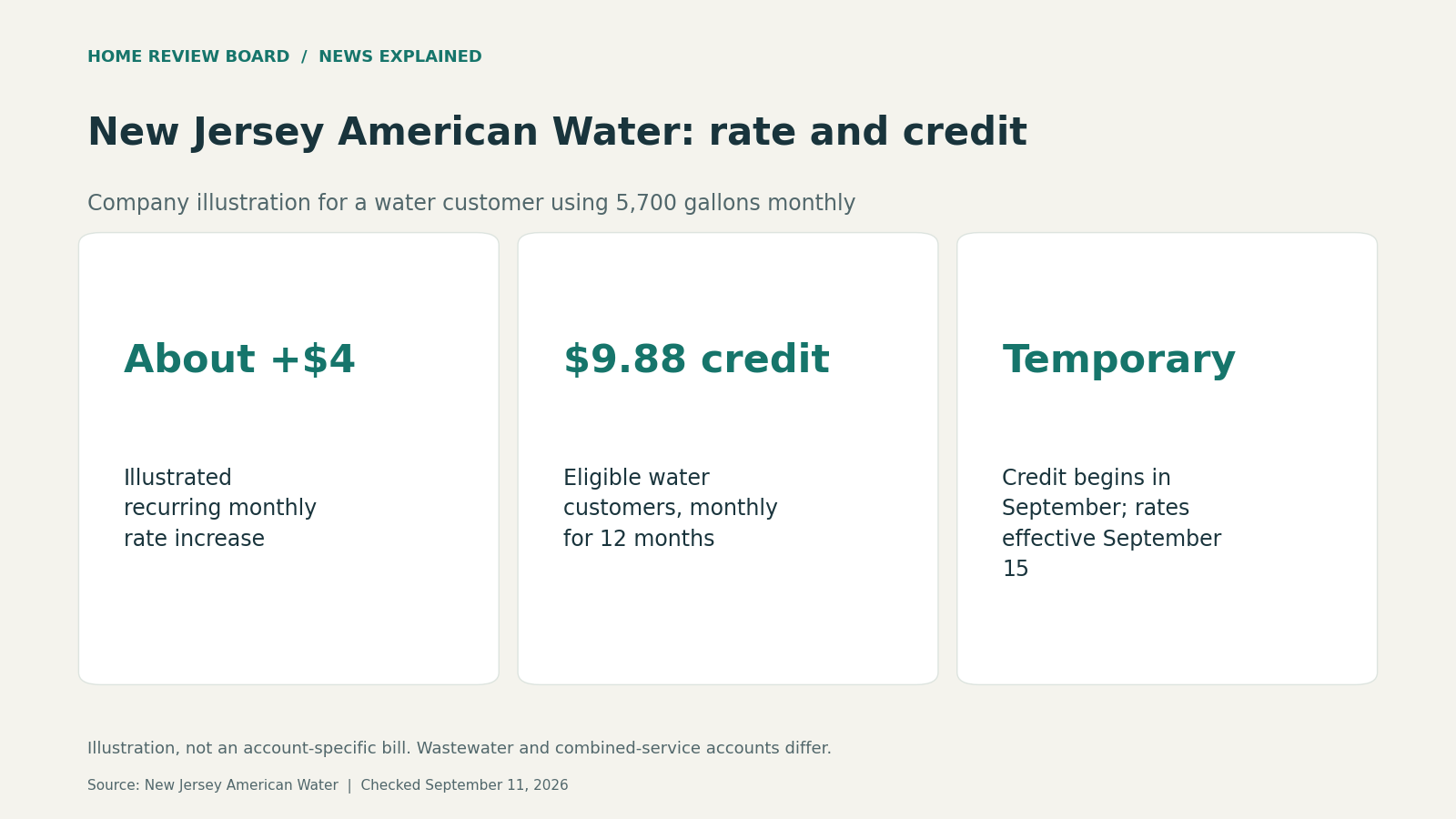
New Jersey American Water announced new rates on September 9, with the change taking effect September 15. At the same time, eligible water customers are due a $9.88 monthly credit for 12 months beginning in September. The temporary credit is important to understanding the next bill, according to the New Jersey American Water announcement.
The company’s example for a water customer using 5,700 gallons a month shows a rate increase of about $4 before the credit. That example produces a net monthly reduction of about $6 during the credit period. Wastewater charges and combined-service accounts work differently, and actual results depend on the account and consumption.
The credit is associated with PFAS settlement proceeds. It is not a permanent reduction in the newly approved rate structure, and it should not be described as a benefit available from every New Jersey water supplier. Customers need to confirm the provider and services shown on their own bill.
Compare like periods and separate line items
Keep the last bill before the change and compare it with the next bill showing the new charges. Check consumption, service dates, the rate components and the credit separately. Looking only at the final total could conceal either a temporary benefit or a change in water use.
For a household budgeting beyond the coming year, the credit’s end matters. A reduced bill during the credit period does not establish what the same usage will cost after the offset expires. The useful question for customer service is how the account’s recurring charges and temporary adjustments are displayed.
Where a plumber fits into the decision
A plumber can investigate a documented plumbing problem; a contractor cannot resolve the utility’s billing eligibility rules. If consumption has increased unexpectedly, collect the meter or usage information and describe any symptoms before arranging a visit. If consumption is stable but charges differ, begin with the utility’s rate explanation.
Home-service businesses should make the same distinction in customer communications. The announcement does not demonstrate a leak in any particular house, nor does a credit eliminate the value of repairing an actual leak. A useful estimate explains the physical work proposed and leaves billing adjustments to the supplier.
The next step is to check whether the account qualifies for the credit and when it appears. Preserve that answer with the rate notice so the household’s budget reflects both the new tariff and the limited duration of the offset.
Further reading
Finding hidden water leaks and How many contractor estimates.
Sources
Home Review Board publishes practical guides and source-grounded news. Project requirements depend on the property and location. Read our research approach.